
Genealogy

Other pages in this section
Search the Catalogue
Welcome
Genealogy is the art of tracing your family's bloodline, or finding your roots, and is one of the few times you start at the end of something and work your way back. This guide will help you to get started, and then dig deeper, using the resources at Wellington City Libraries and further afield.
Whakapapa Research
You'll find some of the information on this page useful for your whakapapa research, but for more in-depth research on iwi and hapū please see our specialised Whakapapa guide.
Books
The Catalogue Quicksearches on the right will take you to some of our guides.
'How to' books on researching family history are especially helpful when you're starting out. Check what we have available at our branch libraries (in the Dewey area starting 929.1) and online as eBooks.
Here are some popular titles in our collections for both beginners (including children) and more seasoned researchers:
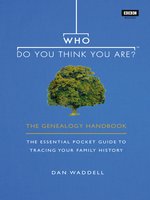 Who Do You Think You Are?, Dan Waddell (ebook)
"Do you know where you came from? Who Do You Think You Are? has been a BBC hit since its first series in 2004, which ignited an extraordinary boom in researching family history in the UK. In this practical, easy-to-use handbook, the WDYTYA? team share their experience and expertise, essential for anyone who would like to discover their family's history." (Overdrive description)
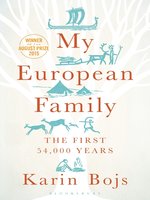 My European Family, Karin Bojs (ebook)
"Karin Bojs grew up in a small, broken family. At her mother's funeral she felt this more keenly than ever. As a science journalist she was eager to learn more about herself, her family and the interconnectedness of society. Karin goes deep in search of her genealogy; by having her DNA sequenced she was able to trace the path of her ancestors back through the Viking and Bronze ages to the Neolithic and beyond into prehistory, even back to a time when Neanderthals ran the European show." (Overdrive description)
It's all relative : adventures up and down the world's family tree / Jacobs, A. J.
"A.J. Jacobs has received some strange emails over the years, but this note was perhaps the strangest: "You don't know me, but I'm your eighth cousin. And we have over 80,000 relatives of yours in our database." That's enough family members to fill Madison Square Garden four times over. Who are these people, A.J. wondered, and how do I find them? So began Jacobs's three-year adventure to help build the biggest family tree in history." (Catalogue)
Magazines
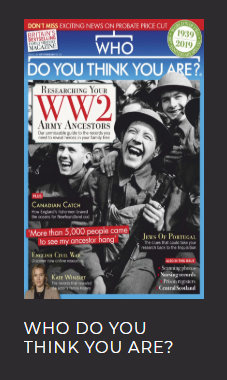
Genealogy magazines are packed with practical advice, tips and tricks to help you track down family history archives and get the most out of online resources. Features on what life was like in the past and the historical events that affected your ancestors bring their history to life and put their lives in the context of the times and places they lived.
- New Zealand Memories
- BBC History Magazine
- History Today
- Onslow Historian
- Southern Bays Magazine
- Stockade
Discover Magazines Online
Did you know you can browse magazines online or download issues to your tablet, phone, laptop or computer?
Check out our Magazines on Overdrive and our Pressreader database for digital magazines which can be read on desktops, tablets and smartphones.
You'll find many useful titles -- have a browse!
Getting Started
Begin with what you already know. And start talking - to your parents, your grandparents, aunts and uncles, anyone who has a link to your family, no matter how remote. Record all the details you can find out from them - names, dates, places, interesting stories - and collect any photos, certificates, letters and other documents they are willing to give you. The tiniest piece of information could be your biggest lead in finding a long-lost relative.
When you have a few names, start filling in a family group sheet to organise the information, and consider starting an online tree.
You will then need some tools to do further research on these people - to find out when and where they lived, when they came to NZ, their occupations, where they're buried, and beyond that, the world they lived in - to help you piece it all together. This is where the library can help.
Key questions we'll answer below:
- When did your ancestors live?
- When did they come to NZ?
- Where did they live and what did they do?
- Finding other information about them — extra details to fill in the gaps
When Did Your Ancestors Live?
Birth, death & marriage indexes
These are available in several different formats, each offering something slightly different.
Department of Internal Affairs website
You can search the historical indexes online and order NZ Government records on the Department of Internal Affairs website for:
- births that occurred more than 100 years ago
- stillbirths more than 50 years ago
- marriages more than 80 years ago
- deaths where the person was born over 80 years, or died more than 50 years ago.
Tips and tricks:
For family history purposes, request a printout rather than a certificate from DIA - a printout contains all the information provided at the time the event was registered and is also cheaper. A certificate, which is issued for legal purposes, contains less information. For the information you can find on BDM certificates go to (registry record).
Remember that even in official indexes names can be misspelt, so don't give up if it doesn't appear under the spelling you expect - try searching for other possible spellings.
Ancestry Library Edition and Find My Past
NZ birth, death and marriage indexes are available through Ancestry, which you can access free in our libraries. These cover the same time periods for each event as on the DIA site. A huge benefit is that you can search on first name only.
Find My Past has a more restricted date range for births and marriages, and doesn't allow first name only searching.
Microfiche - 1840-1990
The NZ BDM microfiche cover a far greater time period than the online indexes and are especially useful for later events.
The microfiche can be accessed at our Cummings Park Library Taonga Tuku Iho Heritage Centre, or alternatively, at the National Library in Thorndon.
Each of the microfiche is an index of names divided into years. When used in conjunction with the District Keys to the NZ Registration Indexes, you can identify which quarter of the year and the district where the birth, death or marriage was registered.
Births (1840-1990):
Until 1956 just the name of the child is given in the indexes. Between 1956 and 1960, the place of birth is listed. From 1960 the name of the mother and the place of birth are listed.
Marriages (1840-1990):
Until 1957 each year had a list of grooms in alphabetical order and a list of brides in alphabetical order. From 1957, cross-referencing occurs. Looking up a groom will also give you the bride's name, and vice versa.
Deaths (1848-1990):
Until 1957 just the name is given in the index. Between 1957 and 1960, the place of death is listed. In 1960 the age of the deceased was added, and 1961 saw the addition of the quarter in which the person died. In 1984 the age (at death) is replaced with the date of the person's birth.
Cemetery records
Why are these useful?
Besides the name and date of death of the deceased, cemetery records often give the occupation and last address of the deceased, the name of next of kin, and the names of other people buried in the same plot, and sometimes have a photo of the headstone.
Local council websites
Cemetery records can be accessed online through most NZ local council websites.
- Wellington - Karori, Makara and Bolton Street Cemeteries
- Whenua Tapu Cemetery (includes plot maps)
The New Zealand Cemeteries site links to cemetery records from all over NZ.
Christchurch City Libraries has a comprehensive guide to NZ cemeteries and cemetery records
Find A Grave
Find A Grave is a free site owned by Ancestry.com to which unpaid volunteers contribute burial information and photographs of graves. There are listings for around 1,970 NZ cemeteries, including: Mount Street Cemetery.
FamilySearch and Find My Past
Both sites provide a searchable index that links to BillionGraves, where you can find a vast collection of headstone transcriptions and photographs. The BillionGraves site claims a high level of accuracy and is free to use, or you can pay a subscription fee to access more tools.
Ancestry - New Zealand Cemetery Records, 1800-2007
Originally produced on microfiche by the NZ Society of Genealogists, this huge collection has been digitised by Ancestry. Even if you can't find a name by searching you can browse the records.
Obituaries
Why are these useful?
Sometimes an obituary is the only biographical sketch we will find for an ancestor. Newspaper notices will usually include the name, date, place of birth and death, name of spouse, children and grandchildren. And often they will identify the relationship of the deceased to other people (as child, sibling etc). Sometimes they will only give the number of offspring, but at least this gives you an idea of how many people you are looking for.
Eg Joe Bloggs - died 18 Sept 1925. Beloved husband of Jane Bloggs, father of 10 children and grandfather of 23.
Papers Past
Newspapers are a rich source for obituaries (as well as birth and marriage announcements) and a huge, searchable collection of digitised 19th and 20th century NZ papers is freely available on Papers Past. The coverage for The Dominion is 1907-1920 and The Evening Post 1865-1945.
A Memory Tree
For more recent obituaries, the privately owned site Memory Tree provides an index to obituaries from 2007 to the present, covering over 90 percent of all deaths listed in NZ. Death notices are collected from around 30 NZ newspapers, including The Dominion Post. Name and date of death are given, with the names of the newspapers where the notices were published. A summary of the details in the original notice can be purchased through the site.
Ancestry - Australia and NZ Obituary Index, 2004-2018
This collection is an index to recent obituaries from hundreds of newspapers. The entries give some basic details - name, gender, death date, date the obituary appeared and the place where the newspaper was published.
Probates/Wills
Why are these useful?
Probates are a goldmine of information for genealogical research. They are public documents held by Archives NZ that give information on how a person's estate was administered after their death. Probate files include:
- Details on the deceased - eg death date, occupation
- Information about their family - eg names of heirs, guardians and executors, relationships, residences
And may also contain documents such as:
- A will, if one was submitted to the courts
- Property records
Archway
Most NZ probates will be listed on the Archives NZ online index Archway. The entry will indicate whether a digitised copy of the probate is available on the FamilySearch site (see below) or whether it must be viewed at one of the Archives NZ offices.
FamilySearch
NZ probate records for 1843-1998 are indexed and images are available for all but the last 50 years. These can be searched on FamilySearch's probate search page. Also, click on 'Learn more' for tips on searching the NZ probates collection and things to keep in mind about probate records.
Tip: If you don't find a probate indexed by name on FamilySearch, it might still be available. Some probate files have been uploaded to FamilySearch but are yet to be indexed. Learn how to search for unindexed probates.
When Did They Come to NZ?
Passenger lists
Many shipping lists no longer exist and many more are not indexed or readily available. But those that are accessible can be a mine of information - showing family groups, ages, occupation or employer, or who paid for the immigrant's passage.
If you're starting from scratch, without any immigration details, you can search by your ancestor's name to look for a passenger list on:
-
Family Search - Archives NZ Passenger Lists, 1839-1973
You can start by searching on the name of your ancestor, but not all of the digitised records are indexed - so you may need to browse the collection by port of arrival, year and ship. There are good tips for searching and browsing the lists. -
Papers Past
Ships' arrivals were usually reported in the newspapers, sometimes with a list of the passengers and often with interesting details about the sailing.
If you already know the name of the ship, or which port they might have arrived at in NZ, or roughly when, you can find many passenger lists on:
- Denise and Peter's
Over 1000 passenger lists, which can be searched by the name of the ship or port of arrival. - New Zealand Bound
Passenger lists arranged by port of arrival. Excellent tips on calculating year of arrival and other details to help with your research, many links to other sites containing passenger lists, and all sorts of information related to shipping. - Passenger Lists to New Zealand
A small collection of passenger lists, regularly updated, and with links to many other sites for researching immigrant shipping. - New Zealand Passenger Lists
Links to searchable databases of passenger lists. - Wellington Passenger Arrivals (Petone Settlers Database)
This database lets users access primary and secondary source data relating to arrivals from the United Kingdom, parts of Europe and Australia to Wellington (Wellington only and Wellington as first port of call) between 1839 and 1897.
Where Did They Live and What Did They Do?
Next section - New Zealand Electoral Rolls
New Zealand historical electoral rolls
(Looking for current electoral rolls? See our FAQ — Current Electoral Rolls)
Why are these useful?
Electoral rolls provide the most complete publicly available list of New Zealanders (eligible to vote), including their occupations and addresses. From the time of the first election in 1853, eligibility to enrol to vote has gradually broadened, making it possible to trace a greater range of people. Included were:
- Initially, male British subjects aged 21 or older who owned property or paid significant rent
- Since 1867, all male Maori
- Since 1879, all male British subjects, not just those who owned property
- From 1893, all female British subjects aged 21 and over
- From 1969, those aged 20 and over, and from 1974 those aged 18 and over
Ancestry Library Edition
Ancestry Library Edition is a research database for genealogists and family history enthusiasts that can help you to trace your family history — with records from United States, United Kingdom, Ireland, Australia and New Zealand.
Access to Ancestry is in-library only. Please note, there are some differences in the Library Edition to the version available to individual subscribers.
Ancestry Library Edition includes access to the New Zealand Electoral Rolls, 1853-2010. Most rolls are searchable by name, but many of the earlier years are not, so when you search on a person's name you'll get no results for certain years. But you can browse the images of the unindexed rolls if you know the electorate they lived in.
New Zealand Electoral Rolls on Ancestry — 1853-2010
Find My Past
For some of the years not indexed on Ancestry, the rolls are fully searchable on Find My Past - although the collection of NZ electoral rolls is much smaller than on Ancestry.
Find My Past has a good description of the historical context of particular rolls, explaining who was eligible to vote and would therefore be likely to appear on those rolls.
Access to Ancestry is in-library only.
New Zealand Electoral Rolls on Find My Past
Directories
Why are these useful?
Directories are like a combined Yellow Pages and Electoral Roll and can be used to trace the movement and occupation of a person over an extended period of time. They record heads of households, usually men, in a single alphabetical list, as well as by town, and include businesses and advertisements.
A good starting place for searching these is Ancestry, where you can search the collection 'New Zealand City & Area Directories 1866-1955'. Some years can be searched by person; others can only be browsed. The collections on both Ancestry and Find My Past comprise mostly the two main directories, Wise's and Stone's.
Military records
Why are these useful?
Military records provide details like your ancestor's birth and death dates, their occupation (including employer's details) and residence when they enlisted, where they are buried, and next of kin information. They can also provide unique facts and insights into their lives - physical characteristics (height, weight, eye colour), medical and health information, religious affiliation, educational level achieved, etc.
Ancestry
Besides the nominal rolls for WWI and WWII, Ancestry now contains the digitised service records for WWI, previously only available through Archives NZ. Ancestry's large collection of NZ military records also includes casualty lists, medal rolls, defaulters, roll of honour, and the Chronicles of the NZEF 1916-1919, a magazine that provided reports on service life, including stories, entertainment, social and sporting events, and obituaries.
Archway
WWI service records held by Archives NZ are digitised on Archway. A soldier's personnel record contains all the official paperwork from their time in the military - medical certificates, correspondence reports from battles, information about how and when they died.
Archway has a guide on 'Researching New Zealand soldiers' to steer you through the process, with a glossary that helps to interpret the information on the service records.
Online Cenotaph
Auckland Museum's Online Cenotaph is a growing resource that has biographical and service details for New Zealand service men and women from the 19th century till today, with a focus on the First and Second World Wars. People are encourage to contribute to the records with photographs, diaries and other documents.
Finding Other Information About Them - extra details to fill in the gaps
Photographs
Wellington City Libraries has a large collection of historical photographs, a valuable source for adding context to family history research. Several thousand heritage photos and postcards relating to the Capital's past have been digitised and can be viewed on our Recollect site.
A vast photographic collection with a broad scope (around 1,600,000 items from the 1840s to the present) is available in the National Library's Photographic Archive. Access is through the National Library catalogue, or through Tiaki, the catalogue for unpublished collections in Alexander Turnbull Library. Many of the images can be downloaded and others can be viewed on-site at the National Library.
School and church history booklets
Traditionally published to commemorate a school reunion or jubilee these have information about the school, its teachers, principals, students of prominence. Some include a complete list of all students who attended the school over the years.
Our branch libraries have copies of local, school and church histories relating to their area.
A selection of our jubilee histories from Wellington schools has been digitised on the Recollect platform:
To discover more about local places of significance to your ancestors, including details about the houses they lived in, see:
- Our Heritage & Local History page
- Te Whanganui-a Tara page
- Wellington City Heritage page
- Wellington City Council Archives
Local histories
Published to commemorate the founding of a town or district, these can feature families of prominence in the area, who may have played a role in the early settlement of the area. They may have held a position of power, eg Mayor, Councillor, or Doctor; or the family ran a business of some importance in the area.
Local histories are usually written with the help of books, diaries, manuscripts, personal papers and letters, recollections of the locals and material found in archival repositories. Use the information found in the bibliographies as a springboard for further information.
Local historical societies
Your local historical society could be a rich source of information in your hunt for long-lost family members. Repositories of a wealth of information (pictorial, written and oral), they can be found in most areas.
Biographical resources
Some key resources for biographical information about notable 19th and early 20th century figures in NZ are:
- The dictionary of New Zealand biography
Originally published in five volumes and covering the lives of people who came to prominence before 1960. It is now part of Te Ara: The Encyclopedia of New Zealand and is regularly updated only as a digital product. The digital version is much more up to date and includes many biographies added since the print edition was produced. - Cyclopedia of New Zealand
Published between 1897 and 1908, this was produced in six volumes, each covering a specific provincial district. The Wellington volume was published in 1897. The biographies contain information about a person, their life, family and friends, and members of the public could have their biography included in the appropriate volume for a fee. The information in these biographies has not necessarily been verified. Also searchable through Ancestry and Find My Past
Featured resources
Resources you have access to with your library card.
Gale Primary Sources
10 historical newspaper databases, including The Times Digital Archive ranging from the 21st century back to the 18th century - read firsthand about events in ancestors' lives such as coal mining strikes, Highland Clearances, or the Boer War...
Ancestry Library
A research database for genealogists and family history enthusiasts aiding you to trace your family history, with records from the US, UK, Ireland, Australia and New Zealand.
In-library access only
Find My Past
Search over 50 million genealogy records for Australia, New Zealand, the UK, Ireland, Papua New Guinea and the Pacific Islands - millions of records that you won't find available elsewhere online.
In-library access only
Useful websites
- Papers Past
Digitised New Zealand newspapers ranging from 1839 to 1945. Coverage includes The Evening Post from 1865 to 1945, and The Dominion from 1907 to 1920 - Wellington City Recollect
Wellington City Libraries' database of heritage photos, books, maps and related ephemera reflecting the Capital's past - FamilySearch
A family history website provided by The Church of Jesus Christ of Latter-day Saints free to the public. Some record images can only be accessed through a FamilySearch affiliate library. In Wellington the National Library has this status and volunteers from the local NZSG branches are often on hand to help researchers - Archives New Zealand
Government records, so the Archway Archives Search is a gold mine of information for the genealogist, especially for wills, army records, divorce records, company records etc. A good place to start are the Archives Research Guides - Auckland City Libraries - History & Genealogy Databases
A searchable collection of free local and family history (mainly Auckland-related) databases, and there are guides to researching family history and whakapapa - Auckland Museum Online Cenotaph
A digital social space where you can contribute to the records of those who served for Aotearoa New Zealand - Helen's page of New Zealand history
Focusing mainly on Wellington and the lower North Island, this site contains early Wellington directories, passenger lists and a mine of other local history information - National Library of New Zealand
Has a specialist genealogy reference centre, as well as housing the Alexander Turnbull Library which focuses on NZ research - Tiaki - Alexander Turnbull Library
Search the unpublished Manuscripts and Pictures Collections of New Zealand and Pacific material in the Alexander Turnbull Library - New Zealand Society of Genealogists (NZSG)
The main organisation to support family researchers; the site links to NZ websites useful for genealogy, a series of downloadable guides, and video presentations. - New Zealand History - Genealogy links
The Ministry of Culture & Heritage's New Zealand History website. Essays, indexes, biographies, and links, all with a site search. Find out contextual information about how your ancestors lived and what they experienced. As well as a directory of genealogy links - New Zealand Online Genealogical and Family History Research Sites
- Wellington City Archives
Wellington City Council Archives has a wealth of information for researching genealogy and family history - dating back to 1842 when Wellington became the first seat of local government in NZ. See also Archives Online browsable site - Wellington GenWeb
Brings together the genealogical resources of the Wellington area to help with your research. Links to many early Wellington resources that you might not find elsewhere - including early Wellington Electoral rolls - Cyndi's List
Popular online genealogical directory. - GENUKI
UK and Ireland genealogy - RootsWeb
A free genealogy community which makes use of online forums and mailing lists to help people research their family history
Contact us
 Written and maintained by library staff. We'd be pleased to hear from you about this page - contact us with any feedback — enquiries@wcl.govt.nz.